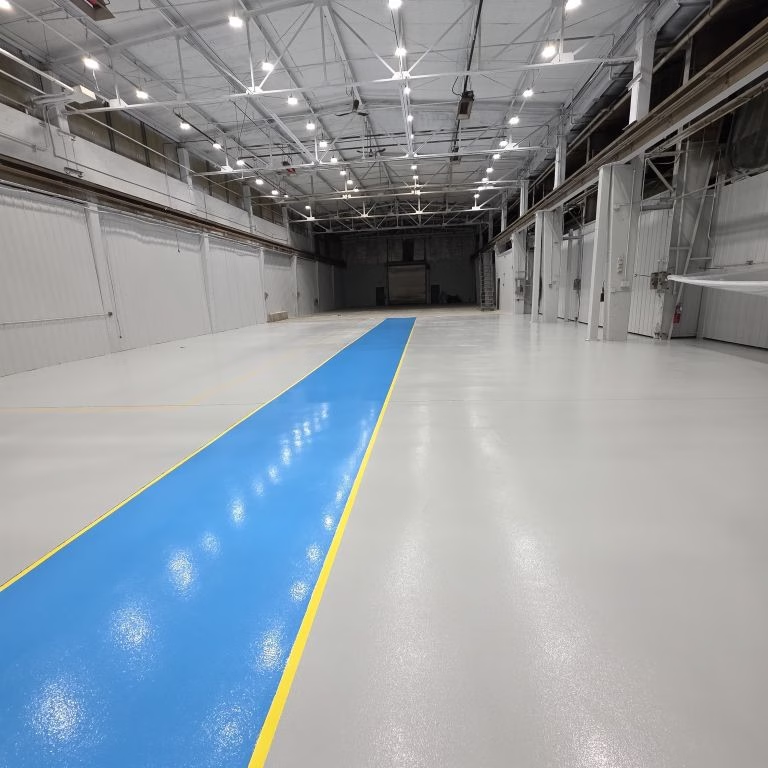
New Jersey's position at the heart of the northeastern US logistics network makes it home to some of the most intensively used warehouse and distribution space in the country. Industrial epoxy flooring in NJ warehouses needs to address not just the generic demands of industrial operations but also the specific conditions that the region's climate, construction practices, and operational intensity create.
Why Is NJ Warehouse Flooring a Specialized Requirement?
The density and diversity of the NJ warehouse market creates flooring demands that range from small regional distributors to massive multi-tenant logistics hubs serving the entire northeastern US market. Each facility type has different operational intensity, different equipment profiles, and different product categories that create varying chemical and mechanical demands on the floor. Industrial epoxy specification in this market needs to be genuinely tailored to each facility's conditions rather than applied generically.
High Performance Systems has served the NJ warehouse market since 1988, developing deep familiarity with the full range of facility types, construction practices, and operational conditions present in the region. That specific regional experience informs specification decisions that contractors without NJ market depth would be making without essential local context.
How Does NJ Climate Affect Industrial Epoxy Installation?
New Jersey experiences genuine four-season weather with cold winters, hot and humid summers, and significant seasonal transitions. Each season creates specific challenges for industrial epoxy installation and performance. Winter temperatures can prevent installation in unheated facilities if the concrete slab temperature drops below the product's minimum application threshold. Contractors who don't account for seasonal temperature management risk installing product in out-of-specification conditions.
Summer humidity creates dew point management challenges. If the concrete surface temperature is at or below the dew point of the ambient air, moisture condenses on the surface immediately before and during coating application. That condensation destroys adhesion. Experienced contractors monitor surface and dew point temperatures continuously during summer installations and adjust work timing accordingly.
What Makes NJ Concrete Slab Construction Practices Relevant?
The industrial concrete slabs commonly found in NJ warehouses reflect decades of regional construction practice. Many existing facilities have slabs installed under practices and with materials that differ from current standards. Older slabs may contain calcium chloride as an accelerator, which continues to transmit chloride ions upward and create adhesion challenges for some coating systems. Pre-engineered building foundations create specific slab-on-grade conditions different from site-cast systems.
Contractors with NJ-specific experience have encountered these regional construction characteristics and know how to address them in the specification and installation approach. National contractors without deep NJ market experience may not recognize these regional construction features when they're present.
How Does Road Salt Exposure Affect NJ Warehouse Floors?
NJ winters mean aggressive road salting. Delivery vehicles tracked chloride-laden road salt and de-icing chemicals into loading dock areas throughout the winter season. These chloride compounds are aggressive to concrete and to coating systems that aren't specified for their resistance.
Chloride penetration into concrete substrate drives ongoing osmotic moisture movement and can attack reinforcing steel in slabs with inadequate cover depth. Industrial epoxy flooring with low permeability to chloride ions slows this penetration significantly, extending slab life beyond what unsealed or lightly sealed concrete would provide. This chloride barrier function is particularly valuable in NJ dock areas that see heavy winter de-icing chemical exposure.
What High-Profile NJ Warehouse Flooring Project Types Have Been Addressed?
High Performance Systems' documented case studies span the full geography of NJ's warehouse corridor. North Jersey facilities serving the New York metropolitan market. Central New Jersey distribution hubs on major transport corridors. Southern New Jersey facilities near the Philadelphia market. Each geographic zone has slightly different construction practices, tenant mix, and operational characteristics that inform the most appropriate flooring specification.
A industrial epoxy flooring system that performs correctly in a North Jersey refrigerated distribution facility may be specified differently from one serving a South Jersey ambient storage warehouse, even if the surface dimensions are identical. That specification sensitivity to specific facility conditions is what decades of NJ market experience provides.
What PA and NY Facilities Share With NJ Warehouse Flooring Needs?
The broader region served by High Performance Systems extends into Pennsylvania, including the Philadelphia area market, and into New York, including Hudson Valley industrial facilities. These markets share the northeastern climate challenges and logistical intensity of the NJ core market, creating similar flooring demands.
PA facilities in the Philadelphia orbit often serve as the southern anchor of the same logistics networks that the NJ facilities serve to the north. NY facilities in the Hudson Valley market serve the northern metropolitan logistics demand. Industrial epoxy specifications appropriate for NJ facilities translate well into these adjacent regional markets because the underlying conditions are similar.
How Should NJ Facility Managers Evaluate Regional Contractor Expertise?
Regional expertise is verifiable through specific questions. Can the contractor provide references from comparable facilities in the same geographic sub-market? Do they have documented project experience in the specific facility type under consideration? Can they discuss NJ-specific slab construction characteristics and climate management protocols from direct experience rather than theoretical knowledge?
High Performance Systems' physical location at 436 Lincoln Blvd in Middlesex, NJ, and their service history since 1988 in the NJ-NY-PA market reflects the local presence and regional experience that these evaluation questions are designed to identify.
Conclusion
Industrial epoxy flooring for NJ warehouses requires regional expertise that accounts for the specific climate challenges, construction practices, operational intensity, and chemical exposure patterns of one of the country's most demanding logistics markets. Contractors with decades of NJ-specific installation experience bring a depth of relevant knowledge to specification and installation decisions that national contractors without regional depth simply can't match.